SEE. UNDERSTAND. PHOTOGRAPH.
Less auto. More you.
Change a setting. Understand your image.
0 / 53 · Your progress
PRACTICE REFERENCECanon EOS R50Canon RF · 22.3 mm sensor width · 3:2
Explore compatible lenses, sensor format and framing together. Automatic exposure uses a shared learning model.
YOUR PHOTO LAB
Explore freely or learn step by step
Open any lesson here for guided practice, image layers and a knowledge check.
Your next photo idea
47 premium lessons · scroll sideways to chooseAll scenes and lighting variants74
One scene. Different light.PLUS
Each lighting variant has its own photograph and depth layers. AI teaching images; light values and distances are model assumptions.
Loading …
LIVE VIEW 22.3 mm · 1.6×
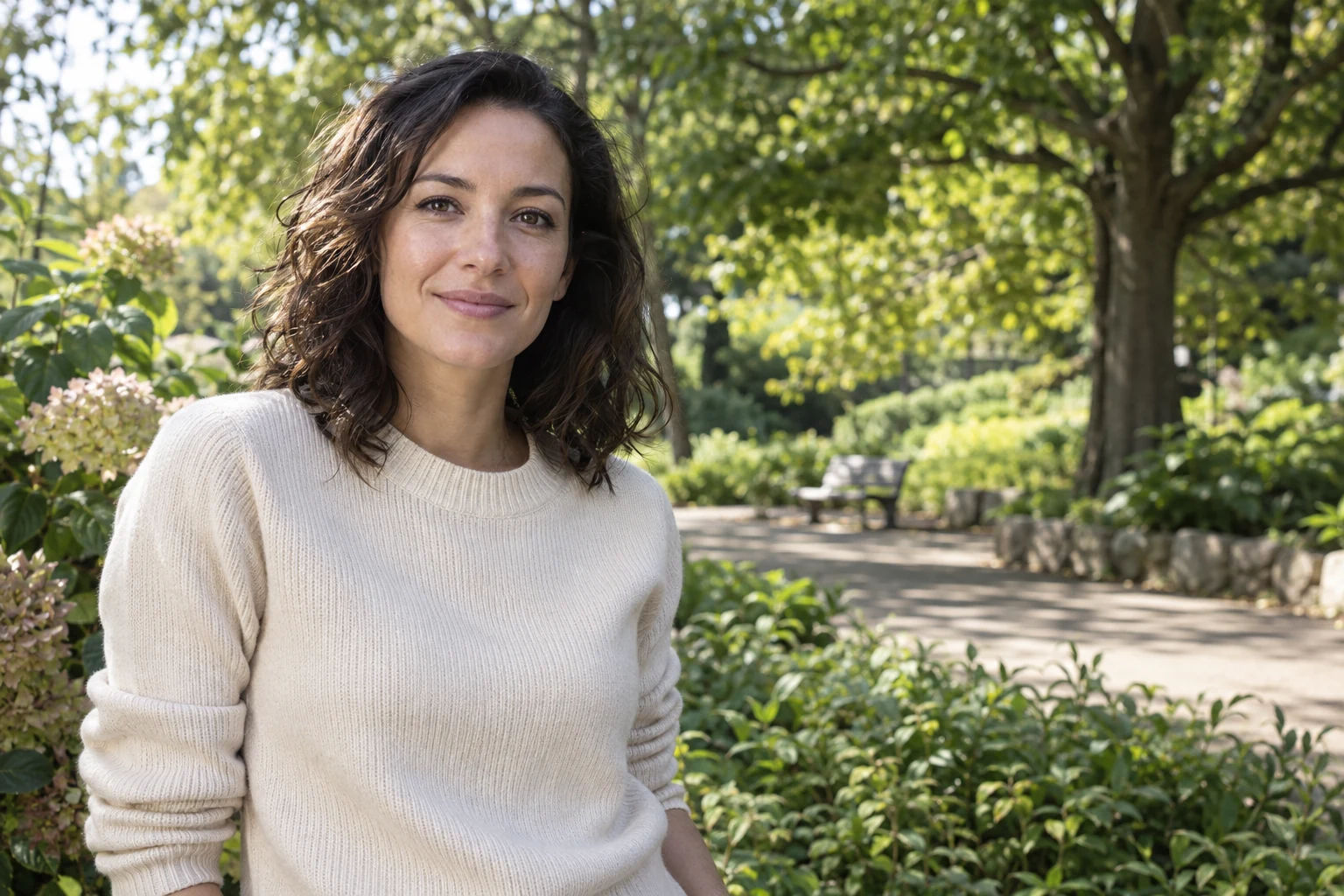
PortraitFocus is available after loading.
A moment in the parkLearning simulation · AI scene · approximate image effects
YOUR SPATIAL SETUP
Where are camera and subject?
RF 50mm F1.8 · 50 mm · 22.3 mm sensor width
Distance unitsCurrently: m / cm
Preparing view …
Arranging photograph objects in space …
- 1Your camera0 mAll distances are measured from here.
- 2PersonCamera → Person: 3 mCamera → Person: 3 mThis cutout object sits on its own photograph plane.
- 3GardenCamera → Garden: 14 mPerson → Garden: 11 m11 m behind the main subject. Reference distance for the surroundings.
Green line: where you are focusing
Focus from camera: 3 m. You are focusing on the main subject.
LENS & CAMERA POSITION
Same framing at 50 mm
Place the camera about 3 m from the main subject. This matches the starting position.
Suggested position for the same sensor and subject size. Above, the photograph setup stays fixed; changing a lens alone does not move the camera.Distances and angle of view in detail
- Camera → Person
- 3 m
- Subject → surroundings
- 11 m
- Lens minimum focus distance (from sensor)
- 30 cm
Photographic cutouts in 3D space, not reconstructed solid objects. Distances come from the teaching model. Layer spacing and camera size are not to scale; use the labelled distances. AI gap filling plausibly reconstructs hidden areas; these are not verified image details. The lab photograph stays unchanged. Camera: example EOS R50; the lens shown on the body is illustrative.
Exposure meter+0.1 EV
-3-2-10+1+2+3
Preview image histogram
SMALL CHANGE. BIG DIFFERENCE.
Separate your subject from the background.
Discover the why behind your settings.
Your photographs 0/4
Your first intentional moment awaits. Take a photo.
Depth and motion are simplified. Not a measurement of camera performance. · Depth of field: 2.82 – 3.20 m.